
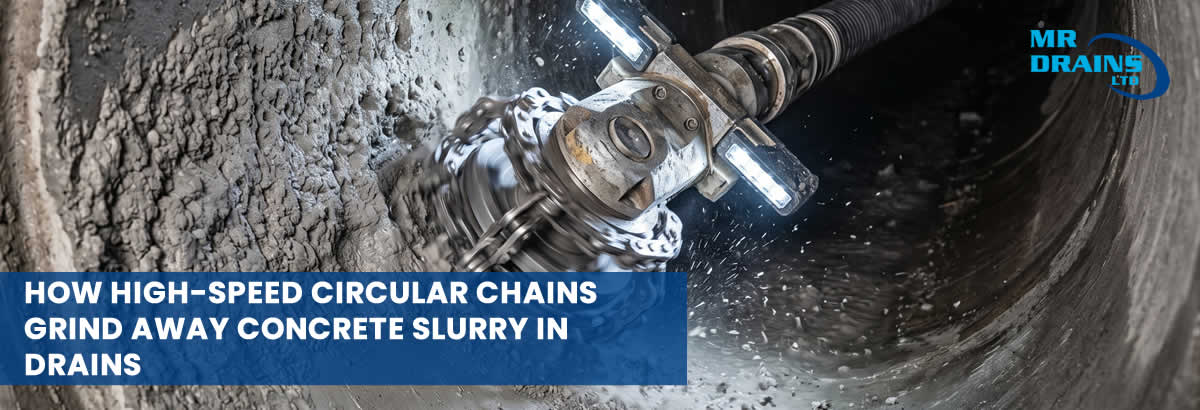
Concrete slurry, cement residue and hardened deposits can create some of the most difficult obstructions inside drainage systems. Unlike ordinary household waste, these materials can adhere firmly to the internal walls of a pipe and gradually reduce its effective diameter. When conventional drain cleaning is not enough, specialist mechanical equipment can provide a more targeted solution. One such approach uses rotating chains to break down stubborn deposits from inside the pipe. This specialist technique is often associated with picote drain cleaning, a method designed to tackle challenging internal pipe conditions while limiting the need for excavation.
Why Concrete Slurry Becomes a Drainage Problem
Concrete and cement-based materials should never be intentionally discharged into drainage systems. However, construction work, accidental spills and poor waste disposal can sometimes result in slurry entering a drain. While wet, cement slurry may appear relatively harmless. As it settles and dries, however, it can harden against the internal surface of a pipe. Additional debris may then attach to the roughened area, gradually creating an increasingly restrictive obstruction. Over time, the affected pipe can experience reduced flow, recurring blockages and eventually complete obstruction. The longer hardened material remains in place, the more difficult it can become to remove without specialist equipment.
What Makes Circular Chain Cleaning Different?
Traditional drain cleaning methods are highly effective for many common blockages, including grease, organic matter and loose debris. Hardened deposits can be more challenging because they may be firmly bonded to the pipe surface.
Circular chain systems approach the problem mechanically. A rotating cleaning head fitted with suitable chains is introduced into the affected section of pipe. As the equipment rotates, the chains make controlled contact with the deposits, progressively breaking down material attached to the pipe wall. The process can be adjusted according to the type and severity of the obstruction. This allows a drainage professional to select equipment and attachments appropriate for the condition being treated.
How the Grinding Process Works
The principle behind the equipment is relatively straightforward. A powered machine rotates a flexible shaft connected to a specialised cleaning head. The head travels through the pipe while the chains rotate at high speed. When the rotating chains encounter hardened deposits, their movement helps loosen and break apart the material. Repeated passes can progressively remove the build-up and restore more of the pipe’s internal diameter. The technique is particularly useful when deposits have formed around the circumference of the pipe rather than existing as a simple blockage in one location.
Specialist picote pipe cleaning equipment can also be used with different attachments depending on the cleaning requirements. The exact equipment configuration should be selected by a trained professional after assessing the drainage system.
Why Pipe Condition Matters
Mechanical cleaning is not simply about using the most powerful available equipment. Before specialist cleaning begins, the condition of the pipe should be considered. Older or structurally weakened pipes may require a more cautious approach than newer, stronger systems.

A CCTV drain survey can help identify the location and nature of the obstruction while also showing whether the pipe has cracks, fractures, displaced joints or other structural defects. This information helps determine whether mechanical cleaning is appropriate and how the work should be carried out. Removing a hardened obstruction is useful, but damaging an already fragile pipe in the process would create a much larger problem.
What Happens to the Removed Material?
When hardened slurry is broken into smaller pieces, the resulting debris needs to be managed appropriately. Depending on the drainage system and the nature of the material, additional flushing or extraction may be required to remove loosened deposits. The objective is to leave the drainage route as clear as possible rather than simply breaking the obstruction into smaller pieces and leaving it downstream. A professional drainage contractor can determine what follow-up cleaning is required based on the size and location of the deposits.
When is Mechanical Cleaning Appropriate?
Circular chain cleaning can be particularly useful when a pipe contains stubborn deposits that cannot be effectively removed through conventional methods. Potential applications may include:
- Hardened cement or concrete residue
- Scale and mineral deposits
- Thick internal build-up
- Persistent restrictions
- Deposits adhering to the pipe wall
- Difficult commercial drainage obstructions
However, the technique is not automatically suitable for every drainage system. Pipe material, diameter, structural condition and the nature of the obstruction all need to be considered. This is why professional assessment is important before specialist equipment is introduced.
The Importance of Professional Drain Cleaning
Attempting to remove hardened concrete or cement from a drainage pipe without suitable equipment can make the situation worse. Aggressive or inappropriate cleaning methods may damage the pipe or push loosened debris further into the system.
A blocked drain specialist can assess the obstruction and determine the safest practical approach. Professional drainage work also involves more than simply clearing the visible blockage. A contractor should consider why the obstruction occurred, whether there is underlying structural damage and whether additional inspection or maintenance is required.
Preventing Future Concrete Blockages

The best solution is to prevent construction materials from entering drainage systems in the first place. Concrete, cement slurry, plaster and other building materials should be disposed of according to appropriate waste-management procedures rather than washed into sinks, gullies or external drains. Where construction activity is taking place near drainage infrastructure, protecting open drains and checking temporary drainage arrangements can help reduce the risk of accidental contamination.
Restoring Flow Without Unnecessary Excavation
Hardened concrete slurry can create a serious restriction, but excavation is not always the first answer. Where the pipe is structurally suitable, specialist mechanical cleaning can potentially remove stubborn deposits from inside the existing drainage route.
Picote drain cleaning uses rotating specialist equipment to tackle difficult internal deposits. If a severe blockage has resisted ordinary cleaning methods, consulting MR Drains‘ expert can help establish whether mechanical chain cleaning is an appropriate solution. A proper inspection and carefully selected equipment can restore internal flow while reducing the need for unnecessary disruption to the surrounding property.