
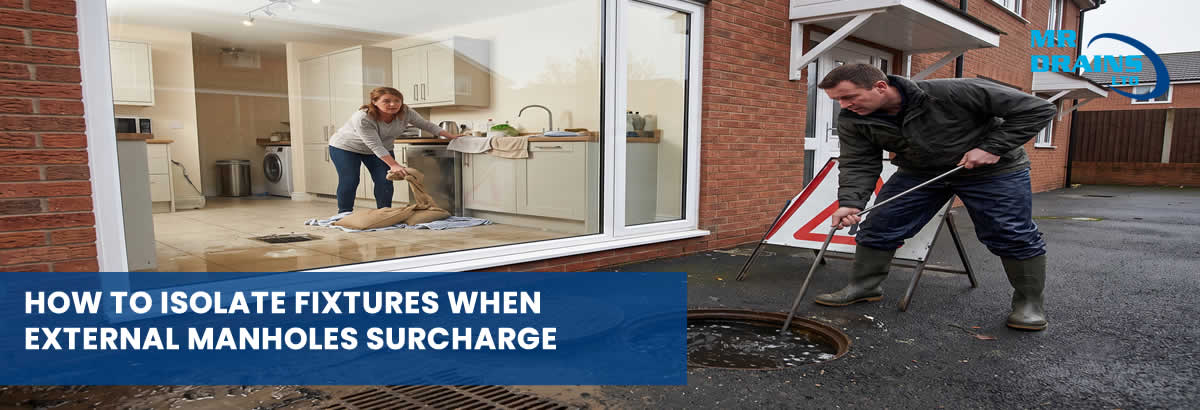
A drainage emergency can quickly become a serious problem when wastewater begins backing up through fixtures inside a property. One common cause is a surcharge at an external manhole, where the drainage system becomes overwhelmed or obstructed and wastewater can no longer flow away normally.
Knowing how to respond while waiting for professional help can reduce the risk of unnecessary damage. The priority should be to limit water use, protect vulnerable areas and isolate fixtures where possible. If wastewater is already backing up, emergency drain clearance may be needed to identify and resolve the underlying obstruction.
What Does a Surcharged Manhole Mean?
A manhole is an access point within a drainage or sewer network, allowing inspection and maintenance of underground pipework. Under normal conditions, wastewater flows through the network without reaching the level where it rises into the manhole. A surcharge occurs when the system becomes overloaded or when a downstream obstruction prevents normal flow. The result can be rising water levels within the manhole.
If the affected drainage system serves a property, wastewater may begin moving back towards internal fixtures. Toilets, sinks, showers and floor drains can become potential routes for wastewater to enter the building. The situation should be treated seriously, particularly where contaminated water is involved.

Step 1: Stop Using Water Inside the Property
The first and most important action is to reduce or stop water entering the drainage system. Avoid using:
- Toilets unless absolutely necessary
- Sinks and basins
- Showers and baths
- Washing machines
- Dishwashers
- Other appliances connected to the drainage system
Even a small amount of additional water can contribute to the problem when a downstream section is already unable to accept normal flow.
If several people are present in the property, make sure everyone understands that water use should be minimised until the drainage problem has been assessed.
Step 2: Identify Which Fixtures Are at Risk
Not every fixture will necessarily be affected in the same way. Lower-level toilets, bathrooms, utility rooms and floor drains can be particularly vulnerable when wastewater is unable to move away from the property.
Observe where water is appearing and whether any fixtures are gurgling, draining slowly or showing signs of rising water. Do not attempt to open a suspicious internal drain simply to investigate if wastewater is already backing up. Opening or disturbing a contaminated drainage point can increase the risk of spills and exposure.
Step 3: Isolate Fixtures Where Possible
If a fixture has an accessible isolation mechanism, it may be possible to prevent additional water from entering that particular appliance or fitting. For example, the supply to certain appliances can sometimes be turned off while waiting for an engineer. This does not necessarily stop wastewater from entering a drain, but it can prevent the appliance from adding more water to the affected system.
The distinction is important: isolating the water supply to an appliance is different from sealing a drainage outlet. Drain openings should not be blocked with improvised materials if doing so could create pressure or cause wastewater to escape elsewhere. Any specialist isolation of drainage fixtures should be handled by a qualified professional.
Protect the Surrounding Area
While waiting for emergency drain services, protecting the property should be another priority. Move furniture, boxes, electrical equipment and other vulnerable items away from areas where wastewater may appear. If safe to do so, place absorbent materials around affected areas to limit the spread of small amounts of water.
However, avoid direct contact with sewage or contaminated wastewater. Wear appropriate protective equipment if you need to enter an affected area, and keep children and pets away from contaminated surfaces. Electrical safety is also important. If water is approaching electrical sockets, appliances or electrical equipment, do not enter the area to unplug devices. Seek appropriate professional assistance.
Do Not Attempt to Force the Blockage Away
When a drainage system is surcharged, pouring chemicals into fixtures or repeatedly flushing toilets is unlikely to solve the underlying problem. Chemical drain cleaners can also create additional hazards for anyone who subsequently needs to work on the drainage system. Similarly, repeatedly adding water may increase the volume backing up into the property. The best approach is to stop contributing to the problem and arrange professional assessment as quickly as possible.
What Can a Drainage Engineer Check?
A professional inspection can help establish whether the surcharge is caused by an internal blockage, a damaged pipe, a problem within the property’s private drainage system or an issue further downstream. Depending on the circumstances, engineers may inspect accessible chambers, use CCTV equipment to examine underground pipework or carry out specialist clearance techniques.
For properties dealing with repeated incidents, identifying the actual source of the problem is particularly important. Clearing the immediate obstruction without understanding why it occurred may result in another emergency later. A professional drain company in London can assess the drainage network and recommend an appropriate course of action based on the condition and location of the problem.
What If the External Manhole is Full?
If an external manhole is visibly full or overflowing, avoid opening it yourself. A manhole may contain contaminated wastewater and can present physical as well as hygiene risks. Standing water can also conceal hazards beneath the surface.
Instead, keep people away from the affected area and contact the appropriate drainage or sewer service. If the surcharge is located beyond the property’s private drainage system, the responsible utility or sewer authority may need to become involved.
After the Emergency Has Been Resolved

Once normal drainage has been restored, do not immediately assume the problem is permanently solved. If the property has experienced repeated surcharging, consider arranging a CCTV inspection or professional drainage assessment. This can help identify structural defects, recurring blockages, root intrusion or other issues that may contribute to future problems. It is also worth checking any affected areas for signs of contamination or water damage and arranging appropriate cleaning where necessary.
Responding Calmly to a Drainage Emergency
A surcharged external manhole can be stressful, especially when wastewater begins approaching internal fixtures. The safest response is to limit water use, protect vulnerable areas, avoid unnecessary contact with contaminated water and obtain professional assistance.
Arranging emergency drain service can help restore normal flow and identify the cause of the surcharge. In London properties, MR Drains specialist can provide the appropriate response when an urgent drainage problem occurs. By acting quickly and avoiding improvised repairs, property owners can help limit damage.