
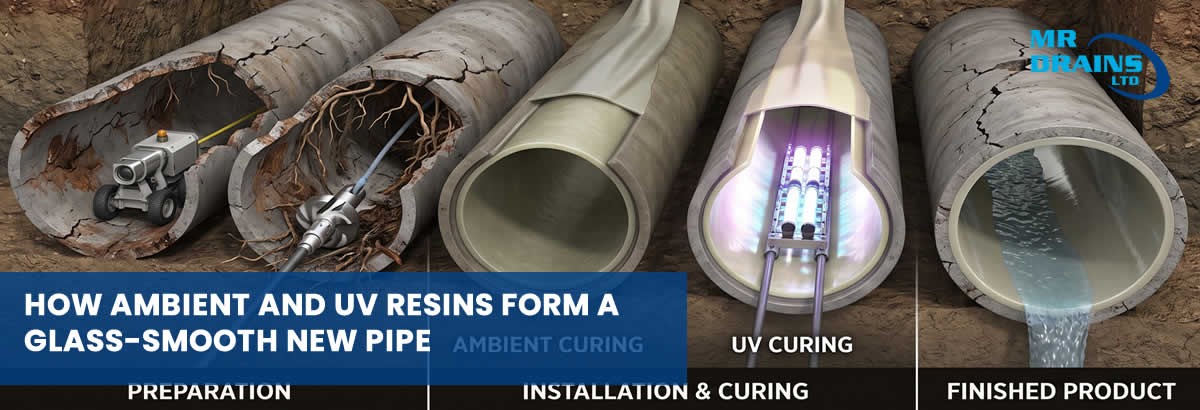
Damaged drainage pipes do not always need to be excavated and replaced. In many situations, modern trenchless techniques can restore an existing pipe from inside, reducing the disruption associated with traditional drainage repairs. One of the most useful approaches is pipe lining, where a resin-based liner is installed inside the damaged pipe and cured to form a strong new internal surface.
Depending on the lining system, curing can take place using different methods. Ambient-cured and UV-cured resins are two approaches used in modern drain pipe lining, each offering a way to create a renewed internal pipe surface without necessarily digging up the ground above it.
Why Is Drain Pipe Lining Used?
Drainage pipes can deteriorate for many reasons. Age, ground movement, root intrusion, corrosion, displaced joints and repeated loading can all contribute to structural problems. Traditional replacement usually involves excavating the damaged section, removing the old pipe and installing a new one. While this remains appropriate in some situations, excavation can be disruptive when drains run beneath gardens, driveways, roads, patios or finished floors.
Pipe lining provides an alternative where the existing pipe is suitable for rehabilitation. Instead of removing the entire pipe, a new lining is formed inside it. Once cured, the liner creates a continuous internal surface that can seal certain defects and restore the integrity of the drainage route.
Preparing the Existing Pipe
A successful lining project starts long before resin is introduced. The existing drain needs to be inspected to determine whether lining is technically appropriate. CCTV surveying can help identify cracks, fractures, root intrusion, open joints, deformation and other defects.
The pipe also needs to be thoroughly cleaned. Grease, scale, roots, silt and other deposits can prevent the liner from sitting correctly against the existing pipe wall. This preparation stage is essential because the quality of the finished lining depends heavily on the condition of the surface onto which it is installed.
How Ambient-Cured Resin Works
Ambient-cured systems use resin that hardens under suitable environmental conditions without requiring a dedicated UV light source. A flexible liner is impregnated with resin and positioned inside the prepared section of pipe. The liner is then formed against the internal wall of the existing pipe.
As the resin cures, it hardens and creates a new structural surface inside the original pipe. The curing period can depend on the specific resin system, temperature, pipe conditions and manufacturer’s requirements. Once sufficiently cured, the result is a continuous lining designed to provide a renewed internal pathway for wastewater.

UV curing uses ultraviolet light to activate and harden specially formulated resin. After the resin-impregnated liner has been positioned inside the existing pipe, a UV light train can be passed through the liner. As the light moves through the pipe, it initiates the curing process. This approach allows curing to be closely controlled and can provide a relatively predictable installation process when the system is used correctly.
UV systems are particularly interesting for projects where installation speed and controlled curing are important considerations. The exact process varies between lining systems, so the contractor should follow the manufacturer’s specified installation and curing procedures.
Creating a Smooth Internal Surface
One of the major objectives of modern sewer lining is to create a continuous internal surface with fewer discontinuities than the damaged pipe originally had. A properly installed liner can bridge certain cracks and defects while providing a new internal surface for wastewater to flow through.
The finished surface may also reduce the roughness associated with some damaged or deteriorated pipes. However, the actual performance depends on the lining system, installation quality, pipe geometry and condition of the existing drainage route. This is why professional preparation and installation are so important.
Ambient or UV: Which Is Better?
There is no universal answer. The appropriate curing method depends on the individual drainage project. Factors such as pipe diameter, length, access points, existing damage, resin characteristics and site conditions can influence which system is suitable.
Ambient curing may be appropriate for particular installations where its curing characteristics suit the project. UV curing can offer controlled activation and efficient installation in suitable circumstances. A qualified drainage contractor should assess the existing system before recommending a specific lining approach.
What Happens After the Resin Cures?
Once the liner has fully cured, the drainage system should be inspected again. This can confirm that the liner has formed correctly and that the relevant sections of the drainage route remain open. Any necessary connections or openings can then be reinstated according to the lining system’s requirements. A final CCTV inspection can provide useful confirmation of the completed work and establish a record of the rehabilitated section.
Advantages of Trenchless Drain Lining
Where suitable, trenchless rehabilitation can significantly reduce the disruption associated with drainage repairs. Potential benefits include:
- Less excavation
- Reduced disturbance to landscaping and paving
- Faster access to certain damaged sections
- Rehabilitation of existing pipe routes
- Reduced need for extensive reinstatement work
However, lining is not suitable for every drainage defect. Severely collapsed, inaccessible or incorrectly aligned pipes may require excavation and replacement.
Choosing Professional Drain Services

The quality of a lined pipe depends on more than the resin itself. Inspection, cleaning, preparation, installation and curing all need to be carried out correctly. Professional drain services in London can assess the condition of a drainage system and determine whether lining is a realistic alternative to excavation. For property owners facing recurring leaks, cracks or structural drainage problems, obtaining an inspection before committing to replacement can help identify whether a trenchless solution is available.
Giving Damaged Drains a New Internal Surface
Ambient and UV-cured resins have made it possible to rehabilitate many drainage pipes from within the existing system. By preparing the pipe, installing a resin-impregnated liner and curing it under controlled conditions, contractors can create a continuous new internal surface. Modern drain pipe lining can therefore provide an effective alternative to conventional excavation in suitable circumstances, while sewer lining can help extend the useful life of an existing drainage route. For London properties, MR Drains drain experts can establish whether the pipe is suitable for lining and recommend the most appropriate rehabilitation method based on its condition and location.