
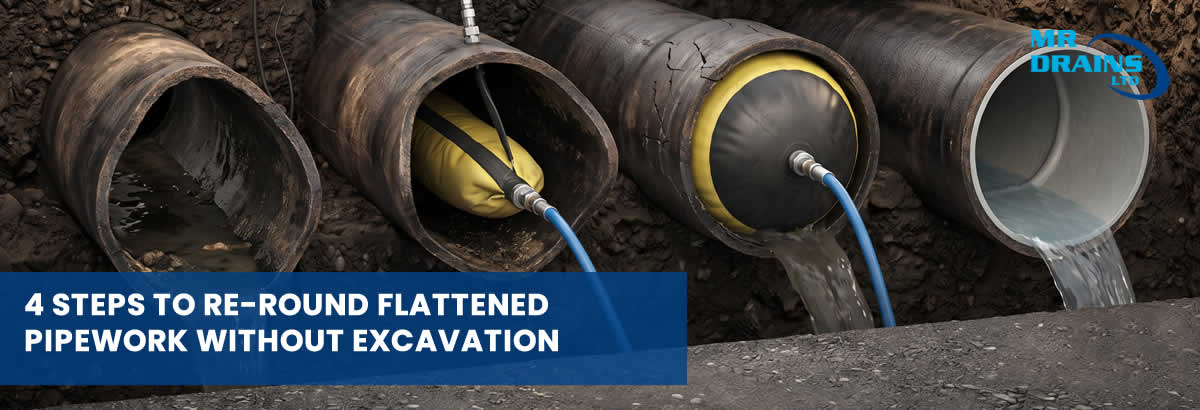
Older drainage systems can develop structural problems that are not immediately visible from the surface. One example is flattened or deformed pipework, particularly in older systems made from pitch fibre. As pipes deteriorate or become affected by surrounding ground conditions, their original circular shape can gradually change, restricting wastewater flow and increasing the likelihood of blockages. Fortunately, not every damaged drainage pipe requires a large excavation. Depending on the condition of the system, modern repair techniques can sometimes restore or reinforce existing pipework with considerably less disruption. Understanding the process can help property owners recognise when specialist pitch fibre pipe repair may be appropriate.
Why Do Pitch Fibre Pipes Become Flattened?
Pitch fibre pipework was widely used for drainage installations in the past. Although lightweight and relatively easy to install, older pitch fibre pipes can deteriorate over time.
One common issue is deformation. The pipe may lose its original circular profile and become partially flattened, reducing the space available for wastewater to pass through. Internal deposits and structural deterioration can make the restriction worse.
External ground pressure can also contribute to deformation, particularly where the surrounding conditions have changed over many years. The result may be slow drainage, recurring blockages or problems that continue despite routine drain clearance.

Step 1: Inspect the Existing Pipe
Before attempting to restore a flattened pipe, the first step is understanding its current condition. A professional drainage inspection can establish the location and extent of the deformation. CCTV equipment can be used to examine the internal condition of the pipe and identify problems such as cracks, displaced sections, deposits or other defects. This assessment is important because not every damaged pipe can be restored using the same technique. The pipe’s diameter, material, accessibility and degree of deformation all need to be considered before a repair approach is selected.
Step 2: Clean and Prepare the Pipe
Once the affected section has been identified, it may need to be cleaned before repair work begins. Accumulated deposits, roots, debris and other obstructions can make it difficult to properly assess the internal surface of the pipe. Specialist cleaning equipment may therefore be used to prepare the pipe for subsequent treatment. Preparation is particularly important when a lining system is being considered. The existing pipe needs to provide a suitable base for the new internal lining. A professional pitch fibre pipework assessment can help determine whether the existing pipe is suitable for a trenchless repair or whether more extensive work is required.
Step 3: Restore the Pipe’s Internal Profile
The next stage is addressing the deformation itself. Depending on the pipe’s condition, specialist techniques may be used to improve the internal profile before or as part of a repair process. The objective is to create a more usable internal passage for wastewater while working with as much of the existing drainage route as possible. This is one of the major advantages of investigating trenchless solutions. Traditional excavation may require sections of paving, flooring, landscaping or other surfaces to be removed in order to access the damaged pipe. A no-dig approach can potentially reduce this disruption where the pipe is suitable for such treatment. However, the precise method must be selected by a qualified drainage professional after inspecting the pipe. Severely collapsed or extensively damaged sections may require a different solution.
Step 4: Reinforce the Pipe With a Suitable Repair
Once the pipe has been prepared, a structural lining system may be considered where appropriate. Pipe relining involves installing a new lining inside the existing pipe, creating a new internal surface without necessarily replacing the entire original pipe through excavation. Depending on the system used, the lining material is formed and cured within the existing drainage route. Modern systems may use different resin technologies and curing methods. The appropriate choice depends on the specific drainage installation and the requirements of the repair. For property owners, the major attraction is that a suitable trenchless repair can potentially address structural problems while avoiding extensive digging.
The Benefits of Avoiding Excavation
Excavation can be disruptive, particularly when drainage pipes run beneath driveways, gardens, patios, roads or finished floors. Digging can involve removing surfaces, accessing the damaged pipe, replacing sections and then reinstating the area afterwards. This can increase both the duration and disruption associated with a drainage repair. Where suitable, trenchless repair techniques can minimise these issues. A drain repair company in London may be able to assess whether a no-dig solution is appropriate based on the condition and location of the affected pipe. The decision should always follow a proper inspection rather than being made solely because excavation is inconvenient.
When is Pipe Relining Suitable?
Relining is not appropriate for every drainage problem. A professional assessment should consider whether the existing pipe has sufficient structural integrity, whether the deformation can be addressed and whether the internal diameter can accommodate the proposed lining.
If a pipe has completely collapsed, is severely displaced or has other major structural issues, excavation and replacement may still be necessary. This is why CCTV inspection and accurate diagnosis are so important. Treating the wrong problem can result in unnecessary expense and may fail to resolve recurring drainage issues.
Protecting Older Drainage Systems
If your property has older pitch fibre drainage, recurring blockages should not simply be treated as routine maintenance. They may indicate that the underlying pipework is deteriorating. Early investigation can reveal deformation before the pipe becomes completely unusable. In suitable cases, pitch fibre pipe repair through trenchless techniques may provide a less disruptive alternative to full excavation.

The most effective solution depends on the pipe’s condition, location and structural requirements. A professional inspection can establish what options are realistically available.
A Less Disruptive Route to Drainage Repair
Flattened drainage pipes can create serious flow restrictions, but repairing them does not always mean digging up the entire area above the pipe. Through inspection, preparation, profile restoration and suitable lining, some damaged systems can be repaired using modern trenchless techniques. For homeowners and businesses dealing with ageing pitch fibre pipework, obtaining a professional assessment is the best way to determine whether this approach is viable. MR Drains’ drain repair specialists in London can evaluate the condition of the existing system and recommend the most appropriate solution, helping property owners balance effective structural repair with minimal disruption to their property.